In the vastness of the Salta Puna, where oxygen is a luxury and the wind dictates the rules of survival, silence has been the only sovereign language for centuries. However, today that silence is challenged by a different narrative. At 4,000 meters above sea level, at the precise point where ancestral territory intersects with 21st-century logistics, the roar of engines no longer simply announces the transport of minerals, but also a paradigm shift.
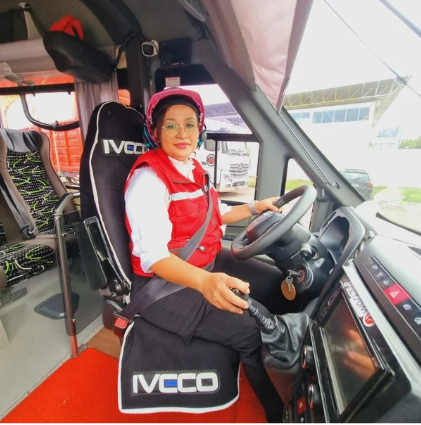
Historically, mining and high-altitude transport were built as bastions of exclusion, environments where harsh weather served as an excuse for the absence of women. But reality is being rewritten. The project «Conductoras de la Puna» It emerges not only as a response to a gender gap, but as an industrial resilience solution that integrates the women of the region into the nerve center of economic development.
Structural transformation requires strong partnerships. In this context, the Cóndor Foundation and Nuevo Bus S.R.L. (part of the Vacazur Group) have established a strategic agreement to professionalize the talent of local communities. The program aims to train 50 women from San Antonio de los Cobres, equipping them with the necessary skills to navigate the country's most challenging roads.
The training moves beyond the purely theoretical to delve into rigorous technical instruction that includes:
Today the company has a 20% female participation, and in training programs, women already represent 35% of the drivers in training, consolidating a vision where local labor is the protagonist of the value chain.
The inclusion of local women as drivers is not a matter of quotas; it is a high-impact strategic decision. Historically, it was believed that the harsh geography required traditionally masculine physical strength. However, these drivers are demonstrating that a caring ethic and an intrinsic connection to the land are key factors for safety and efficiency.
Local talent acts as a stabilizing force in an often transient industry. A driver who knows every obstacle along the way and has her roots in San Antonio de los Cobres offers a commitment to safety and equipment maintenance that surpasses any external standard. Her presence reduces operational risk and humanizes logistics, transforming the perception of mining: from an extractive activity detached from the people to a platform for human development and genuine equity.
The "Women Drivers of the Puna" initiative demonstrates that the limits of an industry are not defined by geography, but by the will of its leaders. The high mountain horizon is no longer a distant landscape for the women of Salta; it is the stage for their own autonomy and the space where the legacy of women is built.
As the routes of the Puna fill with new voices and expert hands, it becomes clear that real progress is not measured only in tons of ore transported, but in barriers broken down.
In the vastness of the Salta Puna, where oxygen is a luxury and the wind dictates the rules of survival, silence has been the only sovereign language for centuries. However, today that silence is challenged by a different narrative. At 4,000 meters above sea level, at the precise point where ancestral territory intersects with 21st-century logistics, the roar of engines no longer simply announces the transport of minerals, but also a paradigm shift.
Historically, mining and high-altitude transport were built as bastions of exclusion, environments where harsh weather served as an excuse for the absence of women. But reality is being rewritten. The project «Conductoras de la Puna» It emerges not only as a response to a gender gap, but as an industrial resilience solution that integrates the women of the region into the nerve center of economic development.
Structural transformation requires strong partnerships. In this context, the Cóndor Foundation and Nuevo Bus S.R.L. (part of the Vacazur Group) have established a strategic agreement to professionalize the talent of local communities. The program aims to train 50 women from San Antonio de los Cobres, equipping them with the necessary skills to navigate the country's most challenging roads.
The training moves beyond the purely theoretical to delve into rigorous technical instruction that includes:
Today the company has a 20% female participation, and in training programs, women already represent 35% of the drivers in training, consolidating a vision where local labor is the protagonist of the value chain.
The inclusion of local women as drivers is not a matter of quotas; it is a high-impact strategic decision. Historically, it was believed that the harsh geography required traditionally masculine physical strength. However, these drivers are demonstrating that a caring ethic and an intrinsic connection to the land are key factors for safety and efficiency.
Local talent acts as a stabilizing force in an often transient industry. A driver who knows every obstacle along the way and has her roots in San Antonio de los Cobres offers a commitment to safety and equipment maintenance that surpasses any external standard. Her presence reduces operational risk and humanizes logistics, transforming the perception of mining: from an extractive activity detached from the people to a platform for human development and genuine equity.
The "Women Drivers of the Puna" initiative demonstrates that the limits of an industry are not defined by geography, but by the will of its leaders. The high mountain horizon is no longer a distant landscape for the women of Salta; it is the stage for their own autonomy and the space where the legacy of women is built.
As the routes of the Puna fill with new voices and expert hands, it becomes clear that real progress is not measured only in tons of ore transported, but in barriers broken down.